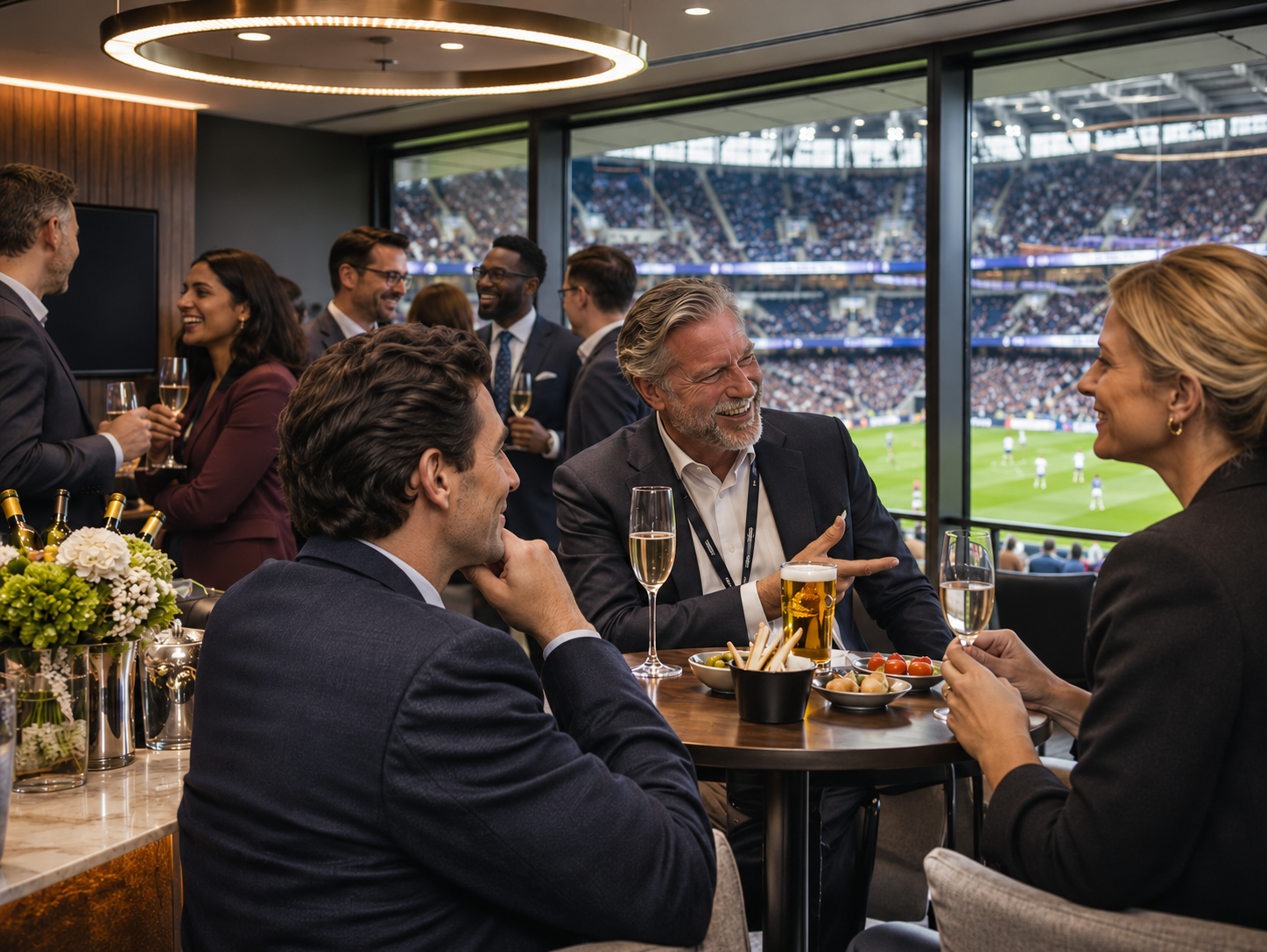
Football has an extraordinary ability to bring people and businesses together. But there's a difference between sponsoring a club and making that partnership work for your business.
There are plenty of reasons to sponsor a football club: reaching supporters, supporting a community institution, opening commercial relationships. And, occasionally, because the CEO has supported them since they were six.
There's something admirable about a successful business backing a club that matters to its community. But there's a distinction between why sponsorship begins and what justifies its continuation. Passion might get you into the hospitality box. It shouldn't be the only thing keeping you there.
Football commands something most brands can only aspire to: genuine affection. Supporters inherit allegiances and develop lifelong loyalties. For sponsors, proximity to that connection can be valuable, but shouldn't be confused with possessing it.
A logo on a shirt doesn't make you part of the culture, just as a season in the hospitality lounge doesn't make you a trusted member of the local business community. These things provide an introduction. What happens afterwards determines whether the relationship becomes meaningful.
Traditional B2B development can be transactional, with prospects identified, approached and pursued. Football changes the setting, creating common ground and allowing relationships to develop beyond an immediate commercial proposition.
But access to a relationship and the ability to develop one are two different things.
One of the more persistent misunderstandings in sponsorship is that the rights package is the strategy. Hospitality places, stadium branding, access to players and social media content might all be useful assets, but none explains what a brand intends to achieve or why anyone should care.
A professional services firm might invite prospective clients to matches, exchange pleasantries over lunch and hope something develops. Hospitality has a legitimate place in business development.
But imagine the same firm creating a forum for ambitious local business owners, bringing people together to exchange expertise, discuss challenges and develop commercial relationships. Football remains the reason people come together. The business gives them a reason to stay connected.
One approach buys access to a room. The other establishes a role within a community. The difference isn't necessarily investment, but intent and imagination.
Gallagher's Leaders Scrum demonstrates the principle: its rugby partnerships bring business leaders together for mentoring, coaching and development, connecting the sport with Gallagher's expertise.
Sponsorship is frequently discussed in terms of what a brand can extract from a relationship: exposure, hospitality, introductions and commercial opportunities. Understandably so. Businesses have every right to expect a return on their investment.
But perhaps the more interesting question is what the sponsor can contribute.
For a technology company, that might mean improving the supporter experience. For a financial services firm, creating opportunities for local enterprise. For a professional services business, sharing expertise with the club's commercial network.
None demands a Premier League budget. A modest lower-league partnership could mean more than an expensive sponsorship whose involvement ends at its logo.
A good sponsorship gives you a presence. A good idea gives that presence a purpose.
Hospitality attendance, social impressions and introductions are relatively easy to count. But they're indicators of activity, not necessarily commercial value.
With lengthy B2B sales cycles, relationships develop across many encounters. Crediting an entire contract to one hospitality event would be convenient; dismissing the partnership because no immediate sale followed would be equally misguided.
Research published in October 2026 by the IPA and Sponsorship Effectiveness Forum found that while 82% of respondents set commercial objectives for sponsorship, only 47% used tools capable of assessing whether those objectives had been achieved.
Define success before investing. Stronger relationships, increased consideration and new opportunities each require different approaches to activation and evaluation.
Perhaps the biggest missed opportunity in B2B football sponsorship is organising everything around the fixture list. Guests arrive, lunch is served, football is watched and everyone returns to work until the next home game.
But the introductions made on matchday can become lasting commercial relationships. Expertise shared at an event can develop into content, conversations or broader initiatives. And a coherent creative idea can connect these activities, giving the partnership relevance beyond the stadium.
At LoveGunn, our work with MG Motor on its Arsenal partnership spans strategy, creative content and activation. We bring that same thinking to B2B partnerships: helping businesses build distinctive ideas, develop relevant relationships and make better commercial use of the rights they've bought.
The most valuable sponsorships don't simply put a brand alongside something people care about. They give people a reason to care about the brand being there.
At LoveGunn, we bring strategy, creative and activation together to help partnerships work harder. To discuss yours, get in touch with Chris at chris@lovegunn.co.


